Featuring Intel's new Core Ultra CPUs, an incredible OLED screen, and an acceptable number of connectors, the most recent ZenBook 14 OLED from ASUS has most of the features we'd want in an advanced ultraportable. Yet, it's unexpected that ASUS's high-end Zenbook hasn't changed all that much in recent years after years of testing the company's laptops and witnessing the advancements made with the Zephyrus G gaming line.
Thanks to its NPU for speeding up AI processes, the new ZenBook 14 is a great step toward the "AI PC" era, but it also serves as a reminder that ASUS is still trailing behind Apple and Microsoft in terms of quality design. It lacks the refined look of the Surface Laptop and doesn't feel quite as solid or elegant as the updated MacBook Air. The ZenBook 14 OLED appears fine; it's as if you requested artificial intelligence to create a picture of a typical ultraportable laptop.
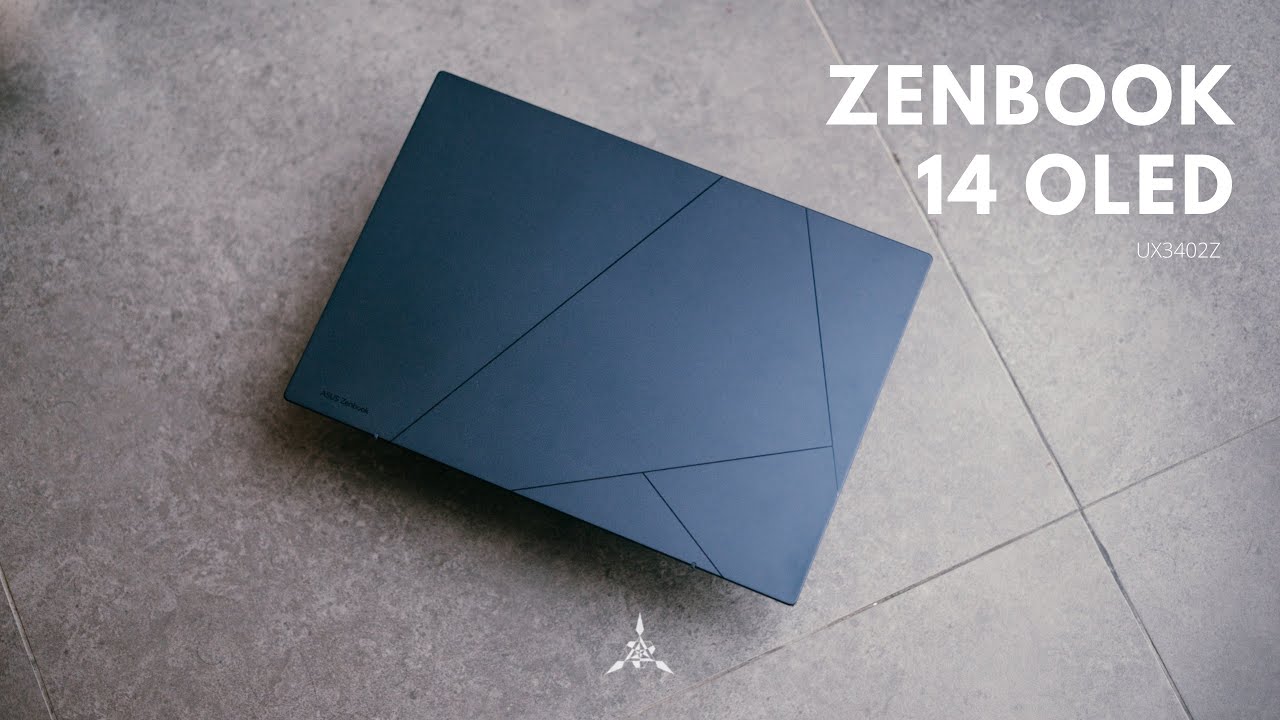
Positively, ASUS is outperforming Apple and the majority of other manufacturers in terms of computing performance. Best Buy is selling the ZenBook 14 OLED, which has a Core Ultra 7 155H processor, 32GB of RAM, and a 1TB SSD, for $1,300. At the same price point, an M2 MacBook Air has a 256GB SSD and 16GB of RAM (upgradable to a maximum of 24GB). Along with a respectable choice of connectors, ASUS also features an HDMI socket, two USB-C Thunderbolt ports, a USB-A port, and a microSD card slot. To use some of those ports on a Mac, you would need to upgrade to the more expensive 14-inch MacBook Pro.
Although ASUS claims that the Core Ultra's AI capabilities are the main improvement this year, the Zenbook 14's magnificent 14-inch 3K OLED screen still has a much stronger pull on me. When required, it is exceptionally bright and dazzling, and it can achieve the deep blacks that we have come to expect from OLED screens. For better scrolling, the Zenbook's OLED screen this year can achieve a refresh rate of 120 Hz, which is almost a need for high-end laptops these days.
With its OLED screen, the ZenBook 14's images and video virtually pop, making it the perfect device for streaming Netflix or catching up on your YouTube queue. Furthermore, the ultra-thin bezels on the laptop give the impression that the display is floating in midair; in fact, it's so good that I've forgotten how boring the rest of the ZenBook's design is. Additionally, I wish the trackpad wasn't so rigid and the keyboard had a little more bounce and depth.
Let's go back to Intel's Core Ultra processor. With a Core Ultra 7 155H, 32GB RAM, and Intel Arc graphics, our review machine outperformed ultraportables powered by Intel's 13th-generation processors in a number of respectable ways. In PCMark 10, it outperformed the ZenBook S 13 with a Core i7-1355U by 1,000 points, and in the 3DMark Wildlife Extreme benchmark, its Arc graphics outperformed the S 13's Intel Xe graphics by nearly double.
The ZenBook 14 OLED's Arc graphics could also achieve between 30 and 49 frames per second when playing Halo Infinite in 1080p with modest graphics settings, despite it not being a gaming computer. Xbox cloud gameplay streaming produced much better outcomes: In my office, Halo Infinite and Forza Motorsport ran flawlessly via Wi-Fi. Naturally, this speaks more highly of the ZenBook's wireless hardware than its display.
Additionally, Intel's Core Ultra processors are concentrated on much more than simply processing power; in fact, the company's internal benchmarks reveal that, in some single-threaded activities, a 13th-generation chip outperforms the Core Ultra in order to achieve superior AI and graphics performance. Future AI tasks can be handled by the ZenBook 14 OLED thanks to the addition of an NPU; companies such as Adobe and Audacity have stated that they are working on AI-powered capabilities for their apps. With the exception of Microsoft's Studio Effects, which allows you to automatically maintain your frame during video chats and blur backgrounds, there isn't much you can do with an NPU on Windows if you're not utilizing those apps.
Purchasing an AI PC, such as the ZenBook 14 OLED, is less about gaining speed right away and more about making a wager on the future. However, considering the industry backing that Microsoft and other major IT companies have shown, owning a PC with an NPU could soon pay dividends. Imagine if Microsoft added offline functionality to Copilot to improve its responsiveness, akin to Apple's efforts to enable offline use of Siri (which is likewise fueled by the company's Neural Engine). In due course, you might be able to talk to Copilot out loud and ask it to search files or a certain option on your computer right away.
If you're not thrilled about AI PCs in the future, that's okay, too. The Neural Engine and significantly longer battery life were added benefits when Macs transitioned from Intel's older hardware to Apple Silicon chips, which also resulted in major performance increases. On the other hand, Windows users can only hope and pray that NPUs are really utilized by developers.
As for now, though, Intel's Core Ultra CPUs should provide respectable battery life. In the PCMark 10 Modern Office battery testing, the ZenBook 14 OLED lasted longer than any other PC we tested—12 hours and 43 minutes. It held up well for basic productivity work (a lot of web browsing, writing, photo editing, and a few video conversations) during a recent vacation for about a day and a half. However, ASUS is still lagging behind Apple; in our benchmark, the M2 MacBook Air lasted 16 hours and 30 minutes. Fan noise is still an issue as well. The MacBook Air with no fans is entirely silent even while operating at high workloads, but the MacBook Air with fans turned up substantially during a podcast recording.
I've grown to appreciate the ZenBook 14 OLED's OLED display after using it for a few weeks, and I'm excited about what the Core Ultra chip's NPU can do. It's unfortunate that such features are constrained to such a drab packaging. However, if finding a bargain deal is more important to you than style, this ZenBook is hard to beat.
ALSO READ:-

Please Upload a post on Best smartphones of 2024 to purchase
ReplyDelete